
Home › EV Chargers
Home EV Chargers and the National Grid Wiring Rebate
A Level 2 charger needs its own 240-volt circuit, and in an older house that can raise the question of panel space. Call (000) 000-0000 or use the form. A person reads every request and replies with what happens next.
- Costs homeowners nothing
- Electrician license looked up first
- Wiring rebate rules explained
Ask About Electrical Service in Your Area
Tell us about the charger. A person reads it and replies with what happens next.
Please add your name, a 10-digit phone number and a valid email.
Your request didn't go through on our end. Please call (000) 000-0000 so it isn't lost.
Too many requests have come from this connection in a short time. Please call (000) 000-0000 and we'll take it from there.
We couldn't finish the spam check. Wait a moment and send it again, or call (000) 000-0000.
EV chargers
What goes into a home charger
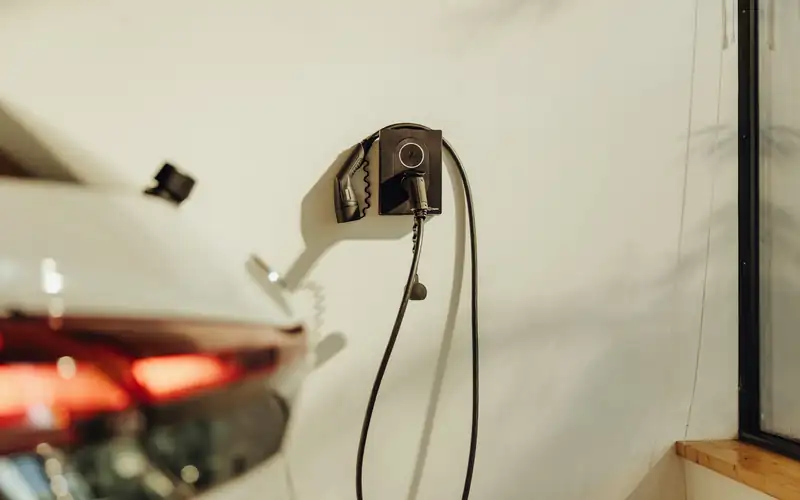
A Level 1 cord plugs into an ordinary outlet and charges slowly. A Level 2 charger runs on a 240-volt circuit, the same kind a dryer or range uses, and most owners want one for overnight charging. Getting it in means a dedicated circuit from the panel to the garage or driveway, a decision about a hard-wired charger or a 240-volt outlet, and a check that the house can carry the extra load. If it can't, the job becomes a panel or service upgrade.
The state's uniform wiring permit form lists EV supply equipment by level, so the charger circuit is reported to the town's inspector of wires like other for-hire wiring (permit application).
Wiring rebates
National Grid's EV charging rebates
In the Greater Lowell towns we cover, National Grid is the electric company. It runs two Massachusetts programs that pay toward charger wiring:
Residential EV Charging Upgrade Program. Rebates the cost of wiring a 240-volt circuit or outlet: up to $700 for a single-family home ($1,400 for two to four units), or up to $1,000 ($2,000 for two to four units) for Environmental Justice Population or R-2 discount-rate customers, whichever is less of the cap or the actual cost. The invoice must show the electrician's name, license number and address, single-family homeowners must enroll in the Off-Peak Charging Program, and the application deadline is December 10, 2026 (EV Charging Upgrade Program).
Turnkey EV Charging Installation Program. For R-2 or Environmental Justice Population customers using National Grid's qualified installers: wiring rebates of up to $1,000 for a single-family home or $2,000 for two to four units, plus up to $700 toward a Level 2 charger for R-2 customers. The deadline is November 30, 2026 (Turnkey program).
National Grid says it expects both programs' incentives to change in 2027. Neither page lists an incentive for panel or service upgrades.
Last verified November 2026. Fees, restrictions and deadlines on this page are due for re-checking by December 2026. New England Electric Pros is a referral service. We don't sell or install chargers, and we don't file rebate applications.
FAQ
EV charger questions
Does National Grid help pay for the charger wiring?
National Grid's Residential EV Charging Upgrade Program rebates the cost of wiring a 240-volt circuit or outlet: up to $700 for a single-family home, or up to $1,000 for Environmental Justice Population or R-2 discount-rate customers, and never more than the actual cost. Applications are due by December 10, 2026, and National Grid expects the incentives to change in 2027.
What does the electrician's invoice need for the rebate?
National Grid requires the invoice to show the electrician's name, license number and address. Single-family homeowners also have to enroll in National Grid's Off-Peak Charging Program.
Does an EV charger need a permit?
For-hire electrical work has to be reported to your town's inspector of wires on the state permit form, which has its own entry for EV supply equipment. The electrician files it.
Will I need a bigger panel?
Sometimes. It depends on how much load the house already carries and whether there's room for a new circuit. If the service itself has to grow, see our page on panel and service upgrades.
What does it cost me to use New England Electric Pros?
Nothing. We don't charge homeowners for the request or the referral; the electrician prices the job.
Town guides
Local rules for EV chargers by town
Each town page names its inspector of wires, how permits are filed there and what its housing stock means for the wiring. Towns with a local guide so far: Greater Lowell, MA (Lowell, Billerica, Chelmsford, Dracut, Tewksbury and Westford). We add towns across New England as we can cover them properly.
Other jobs